Solving AI 3D Printing Challenges from Digital Ideas to Real-World Models
Artificial intelligence and 3D printing are becoming two important forces transforming modern creativity and manufacturing. AI is helping people generate ideas faster, while 3D printing allows digital designs to become physical objects that can be touched, displayed, and used. From personalized products and creative collectibles to educational tools and prototypes, the combination of AI and 3D printing is expanding the possibilities of creation.
However, as this technology develops, different groups of users still face different challenges. Beginners often struggle with complicated 3D modeling software and lack the technical skills needed to create printable models. Designers may have creative concepts but spend too much time converting 2D ideas into complete 3D structures. Even experienced creators need better solutions for handling complex models, adding realistic colors, and preparing designs for efficient printing.
Hi3D focuses on these challenges by providing an AI-powered creation workflow that connects image generation, 3D modeling, and printing preparation. Through features such as image to 3D model, AI-powered multi-color printing optimization, and intelligent model separation, Hi3D helps users transform ideas into practical 3D printable creations with fewer technical barriers.
Different Creators Face Different Challenges in the AI 3D Printing Workflow
The growth of AI 3D printing has made creation more accessible, but the complete process still requires solving several important problems. A successful 3D printing experience is not only about generating a model. The model also needs to maintain visual quality, support efficient printing, and match the creator’s original concept.
Beginners Need a Simpler Way to Enter 3D Creation
For new users, traditional 3D modeling can feel overwhelming. Professional modeling software often requires knowledge of mesh structures, sculpting techniques, and texture editing. Many people have creative ideas but cannot easily turn those ideas into printable models.
A modern 3D model maker AI should reduce these technical barriers and allow creators to focus more on creativity. Hi3D provides this possibility by using AI technology to simplify the process from concept development to 3D model generation.
Designers Need Faster Solutions from Concept Images to 3D Models
For designers and artists, inspiration often starts as a sketch, illustration, or reference image. However, transforming these visual concepts into 3D objects usually requires rebuilding the entire model manually.
This process can slow down creative projects, especially when multiple concepts need to be tested quickly. An efficient image to 3D model AI workflow allows creators to explore more possibilities without spending excessive time on repetitive modeling tasks.
3D Printing Users Need Better Control Over Final Results
A digital model may look impressive on screen, but printing introduces additional challenges. Colors, structures, and model size all affect the final physical result.
Creators need tools that consider not only digital appearance but also practical printing requirements. This is where Hi3D provides advantages by supporting a more complete AI-to-print workflow.
How Hi3D Uses AI to Transform Ideas into Printable 3D Models
Hi3D combines AI generation technology with practical 3D printing features, helping users move from imagination to production more efficiently.
Turning Images into 3D Models with AI Technology
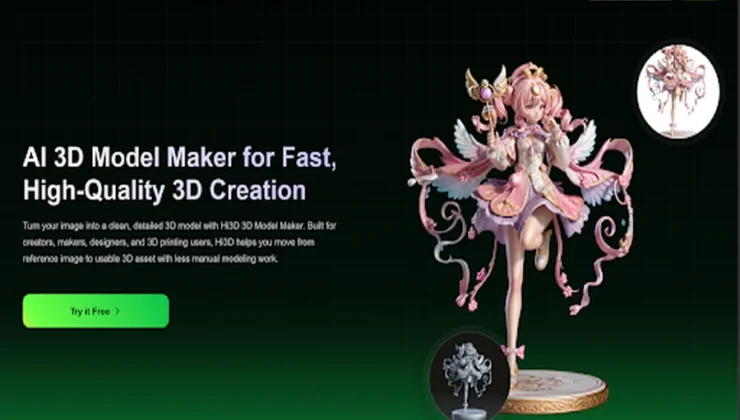
One of Hi3D’s important features is its image to 3D model capability, which allows users to create 3D models from 2D visual references.
Instead of manually modeling every part of an object, users can upload images and use AI technology to generate corresponding 3D models. This 2D image to 3D model workflow provides a more direct connection between visual creativity and physical manufacturing.
From Illustrations and Photos to Real 3D Objects
The advantage of photo to 3D model and picture to 3D model technology is that it allows creators to start with familiar visual materials.
For example, an artist may create a character illustration and want to turn it into a collectible figure. Traditionally, this requires professional modeling skills or hiring a 3D artist. With Hi3D, the initial image can become the starting point for a 3D creation process.
For product designers, the 2D to 3D image converter workflow can help quickly transform design concepts into prototypes. Instead of spending significant time building the first version manually, creators can generate a model foundation and continue improving the design.This makes AI-assisted 3D creation useful for various applications, including personalized products, creative projects, educational models, and prototype development.
Creating More Realistic Results with AI Texture Technology
A successful 3D model is not only about shape. Surface details and visual appearance also determine the quality of the final creation.
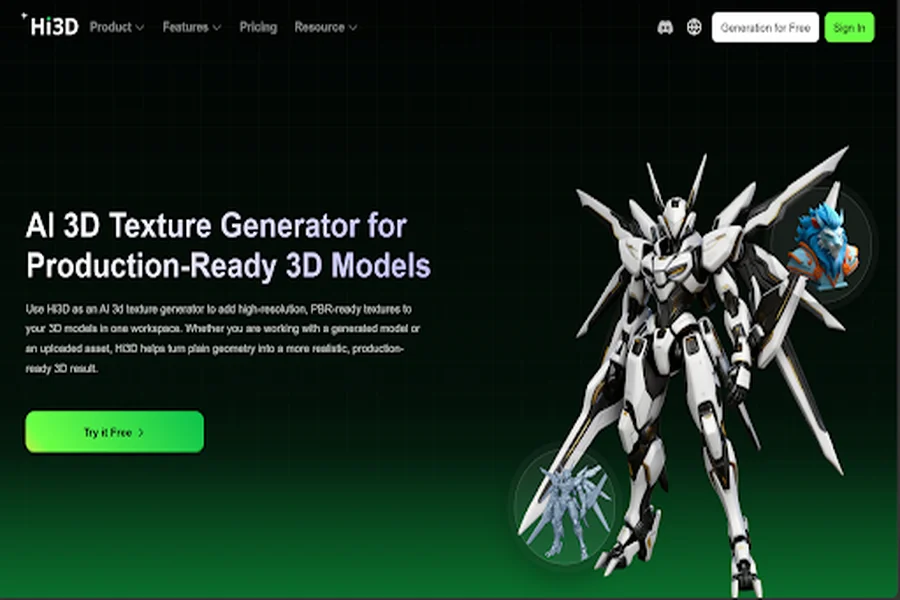
Hi3D supports AI-powered texture generation, helping creators improve the visual quality of generated models. Through AI texturing, users can add more detailed surface information and create models that better match their original concepts.
AI Texture Generation Helps Bridge Digital Designs and Physical Objects
Traditional texture creation can require additional design experience and complicated software operations. For many creators, this becomes another technical challenge after completing the model itself.With an AI 3D texture generator, the process becomes more accessible. AI can assist creators in generating richer surface details, helping models appear more complete before printing.
For example, when transforming a character image into a 3D figure, texture details such as clothing patterns, material effects, and visual elements can greatly influence the final result. Through AI 3D model texture generator technology, creators can improve the appearance of their models without manually creating every texture element.
Multi-Color Printing Makes 3D Models More Expressive
Color is an important part of many 3D printing projects. A model with accurate colors can better represent the original design and create a stronger visual impact.
However, traditional 3D printing workflows often make multi-color creation complicated. Creators need to consider material limitations, color separation, and printing processes before achieving the expected result.Hi3D focuses on improving this process by supporting multi-color 3D printing workflows, allowing generated models to better maintain their original visual characteristics.
Bringing Digital Colors Closer to Physical Prints
For creators producing characters, decorative models, or personalized objects, maintaining color details is essential.A character model generated from an image may include different clothing colors, facial details, or unique design elements. Without proper color handling, the printed object may lose the original creative intention.
Hi3D’s multi-color printing approach helps creators better prepare models for physical production, reducing the gap between digital designs and printed results.This is especially valuable for creators who want to produce collectible figures, customized gifts, educational models, or artistic objects where appearance plays an important role.
Intelligent Model Separation Makes Large and Complex Prints Easier
Another challenge in 3D printing is handling models that are too large or complex for a single print.
Large models may exceed printer size limitations, while detailed structures can create difficulties during printing. Creators often need to manually divide models into multiple parts and ensure they can be assembled correctly afterward.Hi3D helps simplify this process through intelligent model separation features.
Making Complex Models More Practical for 3D Printing
By separating a model into suitable components, creators can print larger designs more efficiently and reduce printing limitations.
For example, a large character figure may need to be divided into the head, body, arms, and accessories before printing. Instead of manually adjusting every section, intelligent separation helps prepare the model for a smoother printing workflow.This provides more flexibility for creators using different printers and allows them to produce larger or more detailed objects.
Real-World Applications: From Creative Ideas to Physical Products
The value of Hi3D becomes clearer when applied to real creative scenarios.
A designer can use image to 3D model AI technology to transform a concept image into a prototype. After generating the model, AI texture features can improve the appearance, while multi-color printing support helps maintain the original design style.
A hobby creator can turn personal artwork into customized models without mastering complex 3D software. A small business can explore personalized products more efficiently by reducing the time required for traditional modeling.These examples show that AI 3D creation is not replacing creativity. Instead, it provides creators with better tools to transform ideas into tangible objects.
Anniversary Celebration: Experience AI 3D Creation with 70% Off
AI and 3D printing are changing how people design, create, and manufacture products. Hi3D addresses key challenges in the creative process through AI-powered features, including image to 3D model, multi-color printing support, and intelligent model separation.
By connecting digital creativity with practical 3D printing workflows, Hi3D helps more users create high-quality models with greater efficiency and flexibility.
To celebrate its anniversary, Hi3D is offering a special 70% off discount. This is an opportunity for creators, designers, and 3D printing enthusiasts to explore AI-powered 3D modeling and experience a simpler way to turn creative ideas into real-world objects.