Step-by-Step Guide to DTF Printing:
The textile printing industry has witnessed many innovations, but few have gained as much attention as Direct-to-Film (DTF) printing. It combines flexibility, precision, and durability, making it a strong alternative to traditional printing methods like screen printing, sublimation, or direct-to-garment (DTG). For small businesses and startups, success often begins with choosing the best affordable DTF printer that balances price and performance while still delivering professional results. But beyond the hardware, understanding how DTF printing works step by step is equally important to unlock its full potential.
Step 1: Preparing the Artwork:
Every DTF project begins with digital artwork. Specialized RIP (Raster Image Processor) software is used to manage the design. Unlike basic editing tools, RIP ensures proper color separation and sets the white ink underbase—critical for vibrant prints on both light and dark garments. With the right file preparation, even complex gradients, shadows, and fine details can be translated onto fabric with clarity.
Step 2: Printing on PET Film:
Instead of printing directly onto fabric, DTF technology uses a PET transfer film. The printer first lays down CMYK inks to form the design, followed by a white ink backing. This ensures the print maintains vibrancy regardless of garment color. Since the film captures details precisely, DTF can handle intricate artwork, photographic images, and even fine text without losing definition.
Step 3: Applying Hot-Melt Adhesive Powder:
Once the image is printed on the film, a hot-melt adhesive powder is evenly applied to the wet ink. This powder is the key element that ensures strong adhesion between the design and the garment during the transfer stage. The coated film is then cured—usually with a curing oven or heat press—to melt and activate the adhesive. This process prepares the print for permanent bonding.
Step 4: Heat Transfer to Fabric:
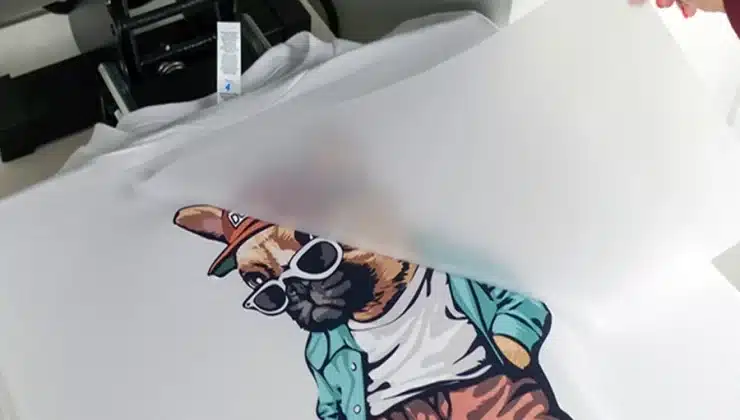
The cured PET film is positioned on the garment and pressed with a heat press machine under controlled time, temperature, and pressure. After pressing, the film is peeled away, leaving the ink fused seamlessly into the fabric fibers. This creates a durable, flexible, and wash-resistant print that can last through repeated laundering.
Advantages of DTF Printing:
One reason DTF is rapidly growing in popularity is its adaptability. Unlike sublimation, which works mainly on polyester, DTF is compatible with cotton, polyester, blends, leather, and even unconventional materials. Compared to screen printing, DTF requires no messy setup or large batch production—making it cost-effective for both small runs and mass orders. And unlike DTG, there’s no need for pretreatment, saving time and labor.
Another advantage is durability. Prints created through DTF resist fading, cracking, and peeling even after multiple washes. This makes the method especially attractive for businesses serving customers who expect professional, long-lasting quality.
Understanding DTF Printer Price ;
For entrepreneurs, investment in technology must balance cost and return. Understanding the DTF printer price is essential when evaluating options. Entry-level desktop printers are available at relatively low costs, perfect for startups testing the market. On the other hand, industrial-grade printers—designed for higher volumes—carry a larger price tag but deliver unmatched efficiency and scalability.
The right choice depends on business goals. A small fashion brand printing custom T-shirts might thrive with an affordable model, while a large-scale garment manufacturer may find industrial printers more profitable in the long term.
Real-World Applications:
The versatility of DTF printing makes it a strong fit across industries. Independent designers use it for custom apparel, small businesses leverage it for promotional products, and established brands use it to expand product offerings. From sports uniforms and workwear to tote bags, hoodies, and hats, DTF makes it easy to meet diverse market needs.
Even niche industries, such as merchandise creators for events, benefit from DTF’s ability to produce limited runs quickly without needing bulk orders. This reduces excess inventory and aligns with today’s sustainable business practices.
Why DTF Is the Future of Textile Printing:
As consumer demand for customization grows, DTF continues to prove itself as a forward-looking technology. Ongoing advancements in ink chemistry, curing systems, and automation are expected to improve print quality and speed while lowering costs. This means businesses that adopt DTF early are well-positioned to stay ahead of the competition.
In addition, as global e-commerce expands, small brands need flexible solutions that allow them to fulfill unique orders efficiently. DTF’s ability to support both mass production and personalized one-off designs makes it one of the most promising technologies for the future of textile decoration.
Conclusion:
DTF printing is more than just a new trend—it is a complete printing solution offering versatility, cost efficiency, and professional quality. From the design stage to the final transfer, every step contributes to producing prints that are sharp, durable, and adaptable to multiple fabrics. By choosing the right machine and understanding printer pricing, businesses can make smarter investments and achieve long-term success in the competitive textile industry.
Whether you’re a startup exploring custom apparel or an established manufacturer scaling production, DTF provides the flexibility to meet market demands today and the innovation to support growth tomorrow.