What Makes Laser Welding and 3D Printing the Go-To for Complex Medical and Aerospace Geometries
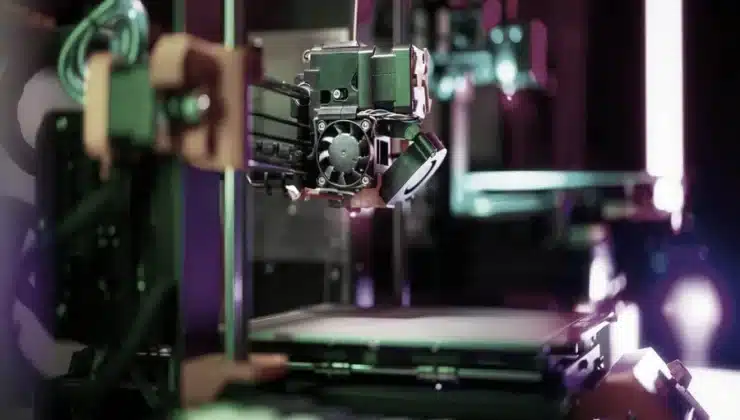
Designing and building parts for medical and aerospace applications means tackling intricate shapes, exacting structural needs, and rigorous regulatory demands. Traditional machining can struggle with such complexity – and that’s where the winning combination of laser welding and 3D printing enters the picture. By fusing additive freedom with precise finishing, you unlock new design possibilities and maintain the high tolerance and reliability your industry requires. Click here to learn more about how these hybrid methods support your complex device needs.
Designing Beyond Limits with Additive Manufacturing
3D printing, especially metal-based processes like DMLS (Direct Metal Laser Sintering) or SLM (Selective Laser Melting), delivers what traditional methods can’t: complex internal channels, lattice structures, and organic geometries, all in a single build. You’re not bound by tool access or machining orientation. You’re not limited by fixture reach or having to split parts into easily machinable sections.
That’s a game-changer in industries like medical implants, where porous or mesh structures promote osseointegration. Or in aerospace, where low-weight, high-performance ductwork and brackets reduce fuel loads and increase payload flexibility. You get full design freedom, from honeycomb interiors to fine-tuned wall thickness, without adding production steps or cost-heavy tooling.
In many cases, this means you can move faster from concept to prototype, giving your team a way to iterate designs in real time without sacrificing functionality. It’s a direct path to proof-of-concept and production.
Why Laser Welding Adds Strength and Scalability
Additive parts often benefit from reinforcement – especially when they include seams, segmented structures, or need to exceed printer build platforms. Laser welding fuses components with minimal heat-affected zones, preserving the integrity of both parts and joints.
This isn’t just about joining; it’s about doing so without compromise. With highly localized heating, laser welding eliminates the need for bulky fasteners or overlapping joins that might add weight or interfere with a device’s geometry. The result is a sleek, sealed finish with the strength of a single-part build.
You’re also reducing assembly complexity. Think about the traditional method of fastening or bonding two titanium halves – adhesives can degrade over time, bolts add mass, and manual welds introduce thermal stresses. Laser welding does the job in less time, with fewer variables, and a cleaner finish.
For medical teams, this matters not just in durability but in biocompatibility. A poorly bonded device risks contamination or failure inside the body. For aerospace, every gram and every seal counts toward regulatory approval and real-world performance.
Balancing Freedom and Precision in One Workflow
Have you ever had a part that looked flawless in the CAD model but turned into a tolerancing nightmare on the shop floor? That’s where hybrid workflows shine.
You can 3D print complex geometries first – internal pathways, organic surfaces, weight-saving cutouts – and then switch to CNC machining or laser processing to refine mating faces, critical holes, or other precise toleranced zones. This balance gives you both creative freedom and engineering control.
Laser welding fits right into this sequence. Let’s say you’re producing a multi-part surgical tool: one portion can be additively manufactured with integrated grip textures, while the moving components are machined. Laser welding brings the two together without adding bulk or reducing accuracy.
This workflow isn’t a patch – it’s a pathway to smarter builds. Your design team can push boundaries, and your manufacturing floor can deliver consistently.
Real‑World Fit: Medical and Aerospace Synergies
Laser welding and additive manufacturing have particularly strong fits in medical and aerospace use cases.
- Medical Devices: Picture an orthopedic implant with an internal lattice for bone ingrowth. That structure would be impossible to machine, but easy to print. Then, you laser-weld high-strength mounting brackets or screw interfaces to complete the assembly. The entire part becomes more integrated, more functional, and more robust – without increasing manufacturing complexity.
- Aerospace Parts: Need a curved duct that routes air around fuel lines, but also needs sensor mounts and a flange for structural attachment? 3D print the duct. Machine the flange. Laser-weld them together. That’s structural performance with geometric freedom, using fewer steps and fewer compromises.
You also stay lean in production – minimizing rework, reducing rejects, and streamlining regulatory documentation. For projects with narrow production timelines or tight qualification requirements, this hybrid model gives you a competitive edge.
Efficiency, Waste Reduction, and Material Performance
You already know how expensive aerospace and medical-grade metals can be – especially titanium or cobalt-chrome. Additive manufacturing lets you print near-net-shape parts, wasting less than 10% of material. Laser welding and minimal finishing means you’re not grinding or milling away expensive stock just to meet form.
Combined, this process reduces:
- Raw material costs
- Tool wear and maintenance
- Scrap waste and environmental footprint
You’re also decreasing setup and turnaround time. Laser welding is fast – up to several mm/s – and often automated. When you’re facing rapid iterations in prototyping or tight batch runs in production, every hour saved matters.
Plus, both additive and laser welding are digitally driven. That means repeatable results, traceable processes, and a smoother path through quality assurance or audit checkpoints.
When Design Complexity Meets Structural Integrity Needs
Not every component needs this hybrid approach – but when parts check off even one of these criteria, it’s worth considering:
- Does the part require weight savings without sacrificing function?
- Is internal geometry or passage routing essential?
- Does the part exceed printer bed size or machining reach?
- Will the part be exposed to fatigue, impact, or sterilization cycles?
If the answer is yes, then combining 3D printing and laser welding doesn’t just work – it works smarter. It replaces outdated compromises with next-gen thinking.
Addressing the Challenges Head-On
Let’s be honest: hybrid workflows aren’t plug-and-play. They demand precision – and a tight grip on both design intent and process capability.
But the tools are catching up. You now have laser systems that adapt power and beam focus in real time. Closed-loop sensors monitor heat profiles to avoid distortion. And simulation tools can model stress distribution across welds, helping you predict and resolve failure points before you cut metal.
Material matching is another area to watch. You must ensure that the powder or wire used in additive processes is metallurgically compatible with the welded segments. A mismatch here can mean brittle joints or delamination.
Still, when managed well, these challenges become advantages. You get greater control over tolerances, stronger bonds between parts, and a manufacturing process that’s leaner and more flexible than legacy methods.
Sustainability That Goes Beyond Buzzwords
Let’s dig deeper here – because it’s not just about using less material. Sustainability also includes energy usage, supply chain flexibility, and end-of-life recovery.
Laser welding consumes less power than traditional arc or TIG welding. Additive manufacturing reduces shipping costs (especially if you’re printing close to the point of use) and minimizes the carbon footprint from raw material extraction. Together, they support:
- Just-in-time builds: No stockpiling or warehousing parts
- Shorter design-to-build timelines: Less travel, fewer emissions
- Reduced production waste: Lower scrap rates and less tooling required
If your team is reporting ESG metrics – or preparing for future sustainability compliance – these hybrid processes offer real numbers, not vague “green” claims. You can quantify the energy saved, track material use, and point to exact yield improvements. For clients who care about environmental impact (and regulators who increasingly mandate it), that’s a major win.
The Future Is Hybrid, Intelligent, and Customizable
Expect to see even deeper integration between additive, welding, and subtractive techniques. Equipment manufacturers are rolling out machines that combine multiple heads – DMLS, laser cladding, CNC routers – into one enclosed unit. This reduces setup time, cross-contamination, and human error.
AI is already entering the picture. Adaptive systems can read part geometry, predict distortion, and fine-tune welding parameters in real time. That’s fewer rejects, better finishes, and higher uptime.
What’s next? Likely:
- Custom sensors embedded during 3D printing, welded in place
- On-demand micro-welding for in-field repair
- Component serialization and digital twin syncing via embedded QR codes
The capabilities are expanding – and so are the use cases. If you’re building for complexity, this hybrid approach isn’t just future-ready. It’s already the smart choice.