Selecting the Correct Grain Management Software: Which Attributes Are Not Negotiable
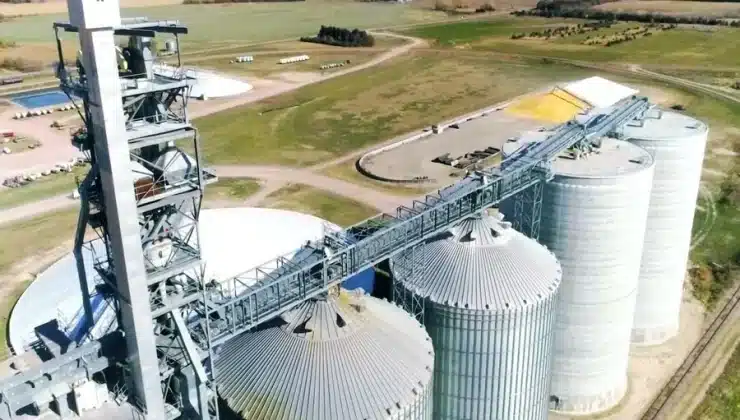
In this rapidly evolving agricultural era, most farmers in Canada are making the transition to digital methods that make their lives easier and enable them to make better decisions. Technology exists in all corners, but one sector that has undergone a massive change is handling and storage in the farm. Of these tools, grain management software is significant in that it assists farmers with everything from storage to inventory tracking. Making the correct choice in such software can save time, minimize waste, and produce improved results for the harvest season.
The Role of Automation in Grain Management:
Automation is one of the most compelling arguments to employ digital solutions to handle grain. If monitoring temperature, moisture, or bin levels is automatically performed, farmers do not need to manually check each detail. This not only saves time but also offers a protection, as automated notifications can stop spoilage. Canadian farmers with bigger farms particularly reap rewards from automation due to the scale, allowing day-to-day manual checks to be nearly impossible.
Importance of Data Accuracy:
Data accuracy is not optional with grain management software. If the records are incomplete or inaccurate, the farmer will suffer losses while selling or while computing available stock. Grain is being sold in quantities, and tiny errors will result in enormous financial issues. Software ensuring accurate data collection and reportage makes farmers confident enough to take proper decisions. In a marketplace where prices fluctuate rapidly, proper data can simply taking the right opportunity to sell.
Integration with Farm Accounting:
Another important feature that farmers in Canada simply cannot afford to miss is integration with farm accounting systems. Grain management is not just a matter of tracking storage conditions but also connecting that information to finances. If the software is not integrated with accounting tools, farmers will spend double the time typing in the same information multiple times. A system that links storage data to sales, expenses, and profits provides for an easier flow of information and better insight into the financial health of the farm.
Inventory Tracking for Improved Planning:
Another absolutely critical feature is inventory tracking. Farmers need to know exactly how much grain is in hand at any moment. Without explicit tracking, selling or planning ahead for shipments becomes hazardous. Grain management software has to provide a simple and correct view of current amounts, previous movements, and impending shortages. When farmers schedule their operations with dependable inventory data, they prevent shortages and overstocking, which tend to strain finances.
Mobile Access for On-the-Go Decisions:
Today’s farming is not confined to the office desk; farmers are in the fields, walking between bins, or dealing with buyers. That is why mobile access is an important part of grain management software. The ability to access the system on a phone or tablet gives farmers instant decision-making capability. For instance, if a farmer is off the farm yet receives notification of shifting conditions in a bin, they can react immediately. The flexibility allows no aspect to be lost because the farmer was not at a computer.
Reports That Support Smart Selling:
Canadian farmers usually have to examine when and where to sell grain according to the marketplace. Grain management software should be able to give extensive reports of storage conditions, inventory, and historical data. Reports assist farmers in understanding their trends and making sales decisions based on this. Proper timing in selling grain makes a huge difference in profit margins, and reports provide the expertise necessary to take advantage of good opportunities.
The Need for Reliable Support and Updates:
Regardless of how sophisticated a system is, farmers require assurance that in case of a problem, they will be able to seek assistance. Grain management software has to be accompanied by stable support alternatives and periodic updates. Technology constantly evolves, and obsolete systems will be a hindrance instead of an answer. Updates ensure the software remains aligned with emerging demands and security requirements, while support ensures farmers are never left stuck fighting technical problems at critical times.
Data Security Cannot Be Ignored:
Grain storage records, inventory accounts, and financial records are confidential data. Compromise in security may open farmers up to threats like data theft or exploitation. As such, security-features-rich software is not an option. In Canada, where agricultural farms are going digital by the day, cyber safety awareness is emerging. Farmers should be assured that their data is safely stored and transmitted without the danger of being compromised.
Scalability for Expanding Farms:
Scalability is another key factor. Most farms in Canada are increasing in size and yield, and the software should also expand with them. If a farmer invests in a system that is only applicable at a small scale, it can become obsolete when the production increases. Grain management software needs to be flexible so it can deal with more bins, bigger storage, and more complicated operations without requiring the farmer to replace the system after a few years.
Training and Ease of Adoption:
Even if the software is well developed, farmers will not adopt it if they feel that it is too complicated. This is why ease of training and simple onboarding should be core features. The system should not use specialized technical expertise but provide instructions that anyone working on the farm can use. In a country like Canada, where most farms are owned by families, it must be easy for several generations to use the same software.
Making the Ultimate Decision:
In weighing grain management software, Canadian farmers must make what cannot be compromised a priority. Automation, accounting integration, real-time monitoring, mobile capability, and solid data security are not amenities but requirements. These features protect the farmer’s investment, time, and effort as well as the integrity of grain quality and money matters. Making an appropriate choice makes farm operations simpler and opens the door to more success in the future.
For farmers, choosing what to use should never be secondary since it impacts all phases of their operations, from quality in storage to the bottom line. Choosing software that does not have basic functions will be the cause of frustration and losses. The best accounting software for farmers is that which allows farmers to feel safe knowing that their grain and their business are being taken care of with precise accuracy and attention. The aim should always be to choose a solution that gives the right information, integrates well with finances, and aids decision-making at all levels.