Sleep and Hormones: What Your Cycle Changes

Sleep and hormones affect each other in big ways, but many people don’t notice how much this matters for women’s health. So what does your menstrual cycle change about your sleep? A lot. Changes in key hormones like estrogen and progesterone can affect how long you sleep, how well you sleep, and even the pattern of your sleep stages. This can change how rested you feel, your energy, and how you feel day to day across the month.
Knowing this link is practical, not just “good to know.” When you can spot how your hormones rise and fall, you can also spot why your sleep changes-and plan better care for yourself. If you want to learn these patterns in more detail and support other people too, training can help. A Menstrual Cycle Coach Certification can teach you about cyclical living and how to guide others to steadier hormones and better sleep.
Key Facts About Sleep and Hormones Across the Cycle
The menstrual cycle is a normal body process that affects more than reproduction-it also affects how long you sleep and how good that sleep feels. Many women notice their cycle affects sleep in some way. Problems often show up three to six days before a period, often linked with Premenstrual Syndrome (PMS). It’s not only the number of hours you sleep, but also the quality-how deeply you sleep and how easily you wake.
Hormone shifts during life stages like pregnancy and perimenopause can also change sleep a lot. And the link goes both ways: sleep can also affect the cycle, including how long your cycle is and how heavy your bleeding is. Hormones like estrogen and progesterone affect mood, body temperature, breathing, the nervous system, and sleep.
Even if total sleep time looks fairly steady in many young, healthy women, small but meaningful changes in sleep stages (like REM sleep and sleep spindles) can still happen across the cycle.
What Links Sleep and Hormones?
Your sleep and your hormones are closely connected. Your body runs on a 24-hour “body clock” (circadian rhythm). This clock helps control things like digestion, temperature, and the release of many hormones. When this timing gets thrown off, sleep often gets worse, and hormone balance can shift too.
Key Hormones That Affect Sleep
Two main sex hormones drive many cycle-related sleep changes: estrogen and progesterone.
Estrogen (especially estradiol) is highest in the follicular phase. It helps build the uterine lining, supports the luteinizing hormone (LH) surge that triggers ovulation, and affects bone health, mood, and heart health. Estrogen also helps blood vessels relax, which supports healthy blood pressure. It often improves cholesterol levels by raising HDL (“good” cholesterol) and lowering LDL (“bad” cholesterol).
Progesterone rises in the luteal phase, made mostly by the corpus luteum after ovulation. Its main job is to prepare and keep the uterine lining ready for a possible pregnancy. Progesterone can also make you feel sleepy because it has mild calming effects. At the same time, higher progesterone raises body temperature and can come with blood flow changes that may slightly raise blood pressure in the luteal phase.
Other hormones matter too:
- Cortisol (stress hormone) affects alertness and sleep timing.
- Melatonin (sleep hormone) helps set your sleep-wake rhythm and makes you feel ready for sleep.
How Hormone Levels Change During the Menstrual Cycle
The menstrual cycle has several phases, and each phase has a typical hormone pattern:
- Menstrual phase (often 3 to 7 days): the uterine lining sheds because estrogen and progesterone drop.
- Follicular phase: the brain releases GnRH, which signals the pituitary to release FSH. FSH helps follicles grow in the ovaries. As follicles develop, estrogen slowly rises and the uterine lining thickens.
- Ovulation (often around day 14 in a 28-day cycle): estrogen peaks and triggers an LH surge, which releases an egg.
- Luteal phase: the emptied follicle becomes the corpus luteum, which makes progesterone (and some estrogen). If pregnancy doesn’t happen, the corpus luteum breaks down, hormones drop, and the next period begins.
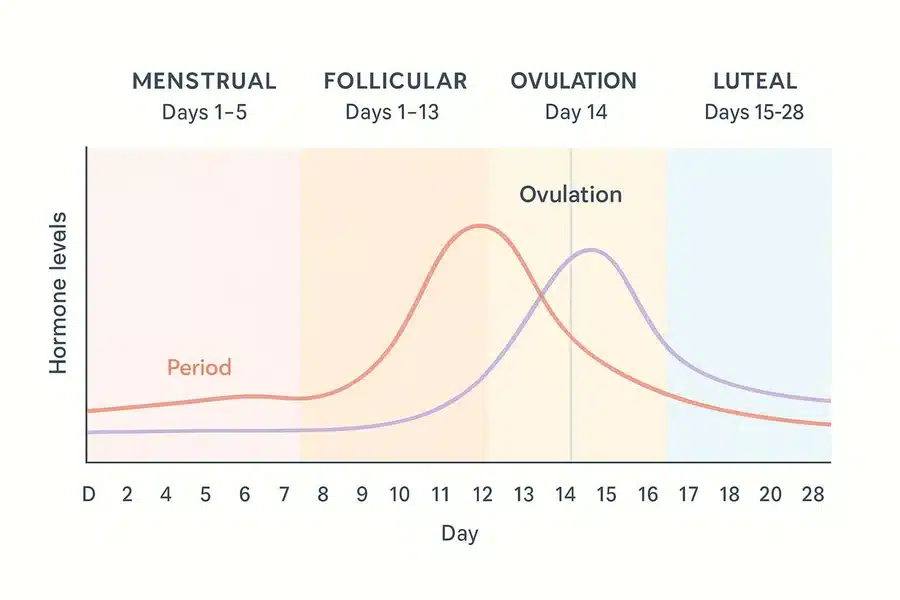
These repeating hormone shifts are a main reason sleep can feel different at different times of the month.
What Happens to Sleep During the Menstrual Cycle?
Hormone shifts across the cycle affect more than reproduction. They can also change sleep in noticeable ways.
Sleep Changes in the Follicular Phase
In the follicular phase, estrogen rises, and many women report steadier sleep and sometimes better sleep. Some research suggests sleep quality may improve around ovulation when estrogen is high. Measures like time to fall asleep, time awake during the night, and sleep efficiency often stay fairly steady in young, healthy women during this phase.
That said, sleep can still vary. For example, research in college female athletes found that sleep on the second night of menstruation (compared with mid-follicular phase) could include shorter total sleep time and longer time to fall asleep. This shows that even small body stressors can affect sleep.
How Ovulation Affects Sleep Patterns
Around ovulation, estrogen is high and some women sleep especially well. This is often linked to estrogen’s helpful effect on sleep. But this may not last long. As the body moves from an estrogen-dominant phase into a progesterone-dominant phase, some women start to notice it’s harder to fall asleep or stay asleep-often the start of premenstrual sleep issues.
Impacts of the Luteal Phase and PMS on Sleep
The luteal phase is where sleep problems often start for many people. After ovulation, progesterone rises and body temperature increases by about 0.4°C. Because the body usually needs to cool down a little to fall asleep well, this extra warmth can make sleep harder.
Progesterone also affects brain chemicals involved in sleep, such as serotonin and GABA. During this phase, some women wake more during the night and may get less slow-wave sleep (SWS), the deepest and most restoring non-REM sleep.
Sleep quality is often lowest in the mid-to-late luteal phase. Right before a period, estrogen and progesterone drop quickly, and this is strongly linked with worse sleep. For women with PMS or PMDD, sleep problems can be stronger. Up to 7 in 10 women report sleep changes right before their period, such as:
- insomnia (trouble falling asleep or staying asleep)
- light or restless sleep
- intense or upsetting dreams
- more daytime sleepiness and fatigue
Stress, anxiety, mood changes, and physical symptoms like headaches, cramps, and breast tenderness can also make sleep worse during this time.
Sleep Quality Around Menstruation
During menstruation, physical symptoms can directly interrupt sleep. Cramps (dysmenorrhea) and heavy bleeding can make it hard to get comfortable, which can cause more wake-ups and trouble falling back asleep. Insomnia symptoms are often reported as more common in the premenstrual and menstrual phases.
Even if total sleep time doesn’t change a lot in healthy young women, sleep stage patterns can still shift. One common finding is increased sleep spindle activity on EEG during the post-ovulatory luteal phase. This is thought to be linked to progesterone and may help the brain keep sleep steadier even during hormone changes. A small drop in REM sleep is also often seen during the luteal phase.
Other body changes happen too, including higher night-time body temperature and a faster heart rate in the luteal phase. This shows the cycle affects many night-time body functions, not just how tired you feel.
Which Conditions and Life Stages Influence Sleep and Hormones?
Hormone shifts happen during the monthly cycle, but they also show up in major life stages and some health conditions, and these can strongly affect sleep.
Polycystic Ovary Syndrome (PCOS) and Sleep Disturbances
Polycystic Ovary Syndrome (PCOS) is the most common hormone-related disorder in reproductive-age women, affecting about 5-20% depending on the group studied. PCOS often includes irregular or missing periods, higher testosterone, and often lower progesterone. These hormone differences can make sleep problems worse.
Women with PCOS are more likely to report trouble falling asleep and insomnia. They also have a higher risk of sleep-disordered breathing (SDB), especially obstructive sleep apnea. Older age and obesity (both common with PCOS) can raise this risk even more.
PCOS is also linked with changes in sleep stages, such as:
- longer time to fall asleep
- lower sleep efficiency
- less REM sleep
More severe sleep-disordered breathing in PCOS is linked with problems like insulin resistance and poor glucose control, suggesting sleep problems may play a part in metabolic issues. Some research also suggests lower melatonin levels in ovarian follicular fluid in PCOS, which may point to wider body-clock disruption.
Menopause: Hormonal Shifts and Sleep Disruption
During perimenopause and menopause, estrogen and progesterone become more irregular and then fall overall. This is a major reason sleep often gets worse during this stage. Hot flashes and night sweats can wake someone many times a night. Lower progesterone (which can have a calming effect) may also make it harder to relax.
The protection estrogen and progesterone may give against sleep apnea also seems to drop after menopause, and older women can become as likely as men to have sleep apnea. Studies show menopausal women often spend less time in REM sleep and may wake feeling less rested.
Hormones play a big role, but symptoms like hot flashes and night sweats also directly interrupt sleep. For some, estrogen therapy can improve symptoms and sleep. Some lifestyle changes may also help, such as:
- eating more soy foods (phytoestrogens)
- avoiding spicy foods
- wearing light sleep clothes
Pregnancy: Hormone Changes and Sleep Needs
Pregnancy involves very large hormone increases, especially estrogen and progesterone. In the first trimester, progesterone rises fast and often makes people very sleepy, with more tiredness and more naps. A person produces more estrogen in one pregnancy than in the rest of life combined, and this helps explain major early changes.
By the third trimester, hormone levels are more steady, but other body changes can disturb sleep, such as:
- frequent urination
- restless legs syndrome
- breathing discomfort
Insomnia can occur in up to 38% of pregnancies and is more common in the third trimester. Sleep matters during pregnancy because better sleep may lower the risk of complications like gestational diabetes and preterm birth. Providers may suggest sleeping with the head raised to reduce reflux and snoring, along with CBT-based support and relaxation skills.
Impact of Hormonal Contraceptives on Sleep
Hormonal contraceptives like combined oral contraceptives (OCs) prevent ovulation by lowering the body’s own hormone production. They are not made to change sleep, but they can change the hormone background, which can affect sleep patterns.
Some studies show that women using OCs may have changes in sleep stages, such as:
- more N2 sleep
- less N3 sleep (slow-wave sleep) compared with naturally cycling women in the luteal phase
- possibly shorter REM onset latency
Synthetic progestins may also increase upper sleep spindle frequency activity, similar to what happens naturally in the luteal phase. OCs can also raise 24-hour body temperature patterns due to the warming effect of progestins. This higher temperature can continue even during the placebo week, unlike natural cycles where temperature drops before a period.
Even though OCs can change sleep stages and temperature, research reviews suggest the overall effect on how women rate their sleep is usually small. Newer low-dose options still need more long-term research, especially on sleep stages and temperature effects.
What Are the Effects of Poor Sleep on Hormonal Health?
Sleep and hormones affect each other in both directions. Hormones can change sleep, and poor sleep can also disrupt hormones and lead to wider health problems.
How Sleep Loss Alters Reproductive Hormones
How long you sleep, when you sleep, and how well you sleep all affect the reproductive system. Long-term sleep loss can change hormone balance. Studies link short sleep (less than six hours) with abnormal cycle length (cycles that are too short or too long). Disrupted sleep and disrupted body-clock timing (common in shift work) are linked with irregular periods and lower fertility. Learning to read these signals is a core part of the menstrual cycle awareness taught at Cyclical School.
Sleep loss may reduce fertility. Some research suggests women who usually sleep 7-8 hours per night have higher conception rates than those sleeping 4-6 hours. Sleep problems are also common for women going through IVF. Poor sleep quality has been linked with worse IVF outcomes, including higher risk of implantation failure. This shows sleep plays a role in natural fertility and in assisted fertility outcomes.
Consequences for Mood, Fertility, and Metabolism
Poor sleep affects far more than the reproductive system. It can worsen mood and brain function, leading to:
- more anxiety and irritability
- weaker focus and decision-making
- lower ability to handle stress
Long-term poor sleep can also add to depression symptoms because the brain needs rest to process emotions and recover.
Sleep also affects metabolism. Poor sleep lowers insulin sensitivity, raising the risk of blood sugar problems and Type 2 diabetes. Blood sugar swings can also interrupt sleep: drops or spikes during the night can trigger cortisol release and cause wake-ups. So poor sleep can affect fertility, mental health, and metabolism all at once.
How Can You Improve Sleep Throughout Your Cycle?
Cycle-related sleep changes can be frustrating, but simple strategies and steady habits can improve rest and support healthier hormone patterns.
Managing Premenstrual and Menstrual Sleep Disruptions
A helpful first step is tracking. Keep a simple daily log for about three months: symptoms, sleep, and the start/end dates of your period. This can help you see patterns and confirm whether sleep problems follow your cycle.
Once you see the pattern, you can plan ahead. In the days when sleep issues usually hit:
- give yourself extra time for rest
- aim for earlier nights if possible
Pain control can also help. Treat cramps with over-the-counter options like ibuprofen (or medicines prescribed to you) so discomfort doesn’t keep you awake. Stress and anxiety can also drive sleep trouble, so skills like CBT tools, mindfulness, relaxation breathing, or counseling can help.
For some people, hormonal birth control or prescribed hormone treatment can reduce hormone swings and improve sleep. If low melatonin is suspected during PMS, talk with your GP before trying melatonin supplements. Many people notice sleep and mood improve once bleeding is over, but planning ahead can make the hard days easier.
Sleep Hygiene Tips for Hormonal Balance
Basic sleep habits can strongly support your hormones and your overall health.
Try these:
- Keep a steady sleep schedule: go to bed and wake up at the same times daily, including weekends (try to stay within 1 hour). This supports melatonin and cortisol timing.
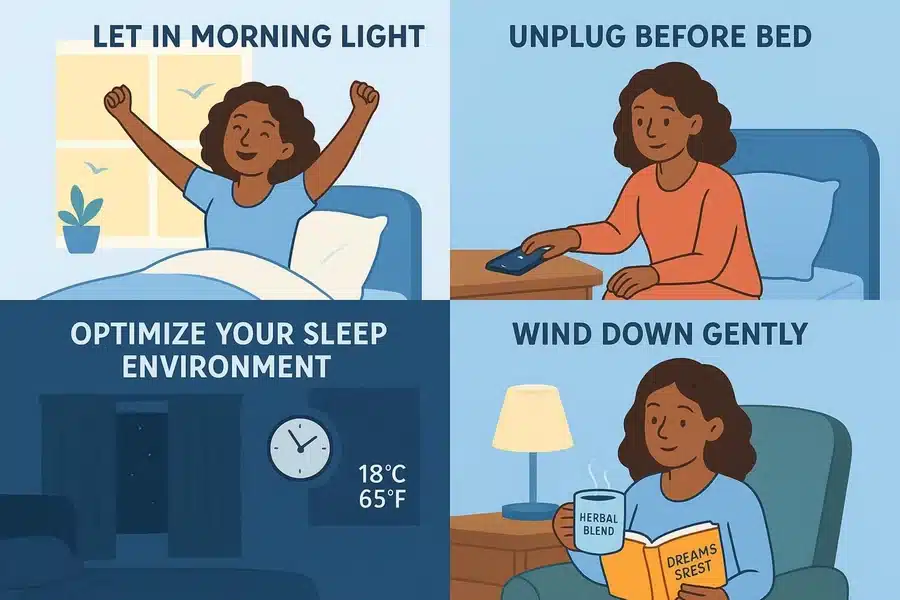
- Set up a sleep-friendly room: quiet, dark, and cool-about 60-67°F (16-19°C). Use blackout curtains, an eye mask, earplugs, or white noise if needed. Pick breathable bedding.
- Cut down screens before bed: blue light lowers melatonin. Reduce screen use 1-2 hours before sleep or use blue-light filters.
- Use a calming routine: warm bath, gentle yoga, breathing exercises, reading a paper book, or journaling. Lower lights to cue your body for sleep.
- Watch caffeine and alcohol: stop caffeine by early afternoon (it can last up to 10 hours). Alcohol can break up REM sleep.
- Get morning light: get 10-15 minutes of sunlight within an hour of waking to support your body clock, cortisol timing, and serotonin (which later helps melatonin). If needed, consider a light therapy lamp.
When to Seek Medical Advice About Sleep and Hormones
Some sleep issues improve with habits, but medical help matters when sleep problems lower your quality of life. If cycle-linked sleep issues are strong or ongoing, talk with a healthcare provider. Bringing a sleep diary can help.
Get checked if you might have:
- PCOS
- thyroid problems
- sleep apnea
During pregnancy, talk to your provider if sleep is poor, since sleep supports both parent and baby health. If you want to try melatonin for PMS-related sleep, speak with your GP first. Treating sleep disorders early (for example, CPAP for sleep apnea) can improve sleep and overall health. People with irregular cycles or complex hormone issues often need a plan that fits their situation.
Conclusion
Across the reproductive years, hormones change many times-from regular cycles to pregnancy to menopause. These changes don’t only affect reproduction; they also shape sleep. Sleep is not fixed. For many women, it changes with the cycle and with major life stages.
Better awareness of this link can lead to better care. That means clearer menstrual health education, easy-to-use tools for sleep support, and strong mental health and social support. For both individuals and healthcare providers, looking at sleep complaints through the lens of cycle phase, life stage, and related conditions can lead to better diagnosis and better treatment choices. Future research with long-term data, broader groups of people, better hormone tracking, and objective sleep measures will keep improving what we know. Sleep is not a luxury-it is a basic part of health that deserves steady attention and care.