Top 5 Gutter Guard Systems to Protect Your Gutters from Leaves
Gutters play an important role in protecting a home from water damage, but they can only work properly when water flows through them freely. Leaves, pine needles, roof grit, twigs, and other debris can quickly collect inside gutters, causing clogs, overflow, and drainage problems. Over time, blocked gutters can damage roofs, siding, foundations, landscaping, and even interior spaces.
This is why many homeowners consider gutter guard systems as part of their long-term home gutter protection plan. Gutter guards are designed to reduce debris buildup, support better water flow, and make gutter maintenance easier. While they do not eliminate cleaning completely, the right gutter protection system can significantly reduce clogs and help extend the life of your gutters.
Below are the top five gutter guard systems homeowners should know about, along with their benefits, drawbacks, and best-use situations.
Why Gutter Guards Matter for Leaf Protection
Seasonal leaf buildup is one of the most common causes of gutter problems. When gutters fill with leaves, rainwater cannot drain properly. Instead, it may overflow near the roofline, spill onto siding, pool around the foundation, or back up into fascia boards.
Quality rain gutter protection can help prevent:
- Clogged gutters and downspouts
- Water overflow during storms
- Roof edge and fascia damage
- Siding stains and mildew
- Foundation water problems
- Landscape erosion
- Frequent gutter cleaning needs
For homes with trees nearby, gutter debris prevention is especially important. A well-chosen gutter cover system helps keep larger debris out while allowing rainwater to enter the gutter channel.
1. Mesh Gutter Guards
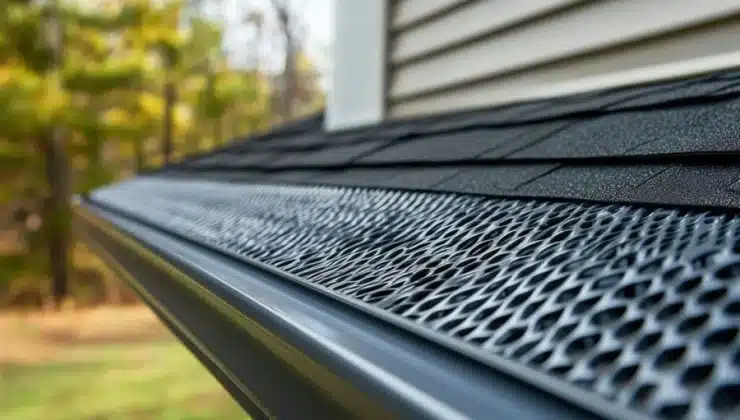
Mesh gutter guards are among the most popular options for leaf protection. They use a screen-like material with small openings that allow water to pass through while blocking leaves, twigs, and larger debris.
Benefits
Mesh gutter guards are effective for many homes because they block a wide range of debris. Fine mesh options can also help reduce pine needles, seed pods, and roof grit from entering the gutters. They are commonly used with seamless gutters and can provide strong long-term gutter protection when installed correctly.
Drawbacks
Some mesh systems may need occasional surface cleaning, especially if wet leaves stick to the top. Lower-quality mesh may bend, rust, or pull away over time. Professional installation is recommended to make sure the guards fit properly and do not interfere with roof drainage.
Best For
Mesh gutter guards are a strong choice for homes with mixed debris, including leaves, small twigs, and pine needles.
2. Leaf Screens
Leaf screens are simple gutter guard systems made from perforated metal or plastic panels. They sit over the gutter and block larger leaves while allowing water to flow through the openings.
Benefits
Leaf screens are often affordable and easy to install. They can reduce the amount of debris entering the gutter and help prevent large clogs. For homeowners with moderate leaf buildup, leaf screens can be a practical rain gutter protection option.
Drawbacks
Because the openings are larger than fine mesh, smaller debris can still enter the gutter. Pine needles, shingle grit, and small seeds may pass through and collect over time. Leaf screens may also require more frequent gutter maintenance than higher-end systems.
Best For
Leaf screens work best for homes with larger leaves and minimal small debris.
3. Reverse Curve Gutter Guards
Reverse curve gutter guards, also called surface tension gutter guards, are designed to guide rainwater around a curved cover and into the gutter. Leaves and debris are supposed to slide off the edge and fall to the ground.
Benefits
Reverse curve gutter guards can handle heavy leaf protection needs when properly designed and installed. Since the gutter is covered, they help reduce the amount of debris that enters the system. They can also reduce direct sunlight inside the gutter, which may help limit organic buildup.
Drawbacks
These systems are more visible than some other gutter guards and may not match every home’s exterior style. During very heavy rain, water may overshoot the gutter if the system is not installed correctly. They can also be more expensive than basic gutter cover systems.
Best For
Reverse curve gutter guards may be suitable for homes with heavy leaf fall and homeowners who want a more enclosed gutter protection system.
4. Foam Gutter Guards
Foam gutter guards are inserts placed inside the gutter channel. The foam allows water to pass through while blocking leaves and debris from settling inside the gutter.
Benefits
Foam gutter guards are easy to install and can be a lower-cost option. They are lightweight and can reduce large debris buildup inside the gutters. For some homeowners, they offer a simple way to improve gutter debris prevention without major changes to the existing gutter system.
Drawbacks
Foam can collect dirt, roof grit, and organic material over time. In damp conditions, debris sitting on the foam may encourage plant growth or mildew. Foam guards may also need replacement sooner than more durable gutter guard systems.
Best For
Foam gutter guards are best for short-term or budget-focused gutter protection in areas with lighter debris.
5. Brush Gutter Guards
Brush gutter guards look like long bristle brushes that sit inside the gutter. The bristles catch leaves and debris while allowing water to flow through the gutter channel.
Benefits
Brush gutter guards are easy to place inside existing gutters and can help prevent large leaves from blocking downspouts. They are also simple to remove for cleaning. For homeowners who want a basic and flexible gutter protection option, brush guards can be useful.
Drawbacks
Debris can get caught in the bristles, which means they still require regular cleaning. Smaller debris may settle at the bottom of the gutter. Brush guards are not always the best option for homes with heavy leaf buildup or pine needles.
Best For
Brush gutter guards work best for light to moderate debris conditions and homeowners who do not mind occasional maintenance.
How to Choose the Right Gutter Guard System
The best gutter guard system depends on your home, roof design, tree coverage, local weather, and maintenance expectations. A home surrounded by pine trees may need a different system than a home with large oak leaves. A steep roof may also require a stronger solution than a low-slope roof.
Before choosing gutter guards, consider:
- The type of debris around your home
- How often gutters currently clog
- Whether downspouts are backing up
- Your roof slope and gutter size
- Local rainfall intensity
- Existing gutter condition
- Long-term maintenance goals
If your gutters are already sagging, leaking, or poorly pitched, gutter guards will not solve the underlying issue. In that case, gutter installation or gutter repair may be needed before adding protection.
For homeowners looking at seamless gutters, gutter protection services, or professional leaf protection solutions, Southwest Seamless Rain Gutters offers helpful guidance for choosing systems that support better drainage and long-term gutter performance.
Gutter Guard Maintenance Tips
Even high-quality gutter guards need occasional care. No system is completely maintenance-free. Leaves, dirt, pollen, and roof debris can still collect on top of guards or around roof valleys.
To keep gutter guard systems working well:
- Inspect gutters after major storms
- Remove debris sitting on top of guards
- Check downspouts for proper water flow
- Look for overflow during heavy rain
- Trim nearby branches when possible
- Clean roof valleys where debris collects
- Schedule professional inspections when needed
Regular gutter maintenance helps prevent clogs, protects downspouts, reduces overflow, and supports better water drainage around the home.
Why Professional Installation Matters
Professional gutter guard installation helps ensure the system fits correctly, drains properly, and works with the existing gutters. Poorly installed guards can cause water to overshoot the gutter, trap debris, damage shingles, or create drainage problems.
A professional can also evaluate whether the home needs gutter repair, gutter replacement, downspout adjustments, or seamless gutters before guards are installed. This is important because gutter guards perform best when the full gutter system is already in good condition.
Conclusion
Gutter guards can be a smart investment for homeowners who want better leaf protection, fewer clogs, and easier gutter cleaning. Mesh gutter guards, leaf screens, reverse curve gutter guards, foam gutter guards, and brush gutter guards each offer different benefits depending on the home and debris conditions.
The right gutter protection system can help reduce water overflow, protect downspouts, extend the life of gutters, and lower the risk of water damage to roofs, siding, foundations, and landscaping. For the best results, homeowners should choose a system based on their property’s needs and consider professional installation for long-term performance.