Above vs. Below Grade: Matching Oil Water Separator Technology to Your Needs
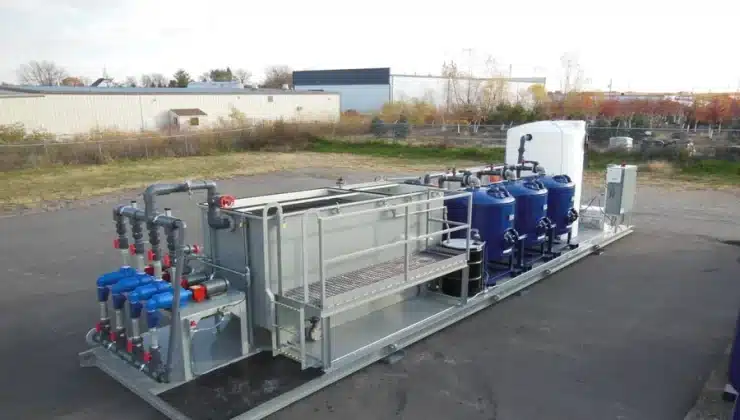
Choosing the right oil water separator isn’t just a technical decision; it’s a critical financial and regulatory one. For facility managers and environmental compliance officers, the primary choice often comes down to two main installation types: above-grade and below-grade. Making the wrong selection can lead to costly maintenance, operational headaches, and significant legal penalties.
The stakes are high. According to the EPA, non-compliance with the Clean Water Act can lead to penalties of up to $25,000 per day for negligent violations. This guide provides a clear framework for comparing above-grade and below-grade systems, empowering you to select the best technology for your specific site and application, ensuring both compliance and peace of mind.
Key Takeaways
- Above-Grade Separators: Ideal for controlled environments with pump feed applications; they offer easy access for maintenance and inspection but require dedicated indoor or protected outdoor space.
- Below-Grade Separators: The go-to solution for saving space and handling gravity-fed sources like stormwater runoff or vehicle wash bays; however, they involve more complex installation and can pose challenges for maintenance and leak detection.
- Key Decision Factors: Your final choice depends on a careful analysis of site constraints, wastewater source (e.g., process water vs. stormwater), flow rate, and strict regulatory requirements.
- A Third Option: For specific scenarios like designated collection areas with gravity flow, flush-with-grade models offer a hybrid solution combining features of both types.
Understanding the Core Designs: Above-Grade vs. Below-Grade
Before diving into a direct comparison, it’s essential to understand the fundamental design and purpose of each separator type. Their physical placement dictates their primary applications, advantages, and limitations.
What is an Above-Grade Oil Water Separator?
An above-grade oil water separator is a unit installed on a solid, level surface, such as a concrete pad. You’ll typically find them inside a facility, workshop, or in a protected outdoor area shielded from the elements.
These systems are most often used for treating process water, where wastewater from manufacturing, equipment washdowns, or other industrial activities is collected in sumps and actively pumped to the separator. They are performance-proven separators that remove non-emulsified hydrocarbons in these pump feed applications, giving operators direct control over the treatment process.
What is a Below-Grade Oil Water Separator?
A below-grade oil water separator is installed completely underground, making it the ideal solution for sites with limited space or where surface-level equipment is impractical. These systems are essential for managing gravity-fed water sources.
They are commonly used for spill containment, treating stormwater runoff from parking lots, and managing wastewater from vehicle maintenance and washing applications. In any scenario where an in-line separator is needed to intercept a flow path without pumps, a below-grade unit is the standard solution. Understanding these fundamental differences is just the first step. Choosing the right oil water separator systems ensures your site handles specific challenges efficiently, whether it’s compact above-grade units for smaller areas or robust, high-performance separators engineered for deep burial and drive-over conditions. With proven technology designed to meet regulatory standards and maximize contaminant removal, selecting the right system directly aligns with your operational needs and compliance goals.
A Head-to-Head Comparison: Weighing the Pros and Cons
The choice between an above-grade and below-grade separator involves a series of trade-offs. What you gain in one area, you may sacrifice in another. Here’s a detailed breakdown to help you weigh your options.
The Case for Above-Grade Systems: Accessibility and Control
Above-grade units are favored in controlled industrial environments where oversight and maintenance are top priorities.
Pro – Simplified Maintenance & Inspection: Their greatest advantage is easy access. Visual inspections, routine clean-outs, and parts replacement can be performed quickly and safely without requiring confined space entry procedures, significantly reducing long-term service costs.
Pro – Lower Leak Risk: Should a leak occur in the tank or its fittings, it is immediately visible. This allows for rapid response, minimizing the risk of environmental contamination, regulatory fines, and costly remediation.
Pro – Controlled Environment: When installed inside a facility, the separator is protected from freezing temperatures, extreme weather, and UV degradation. This stable environment ensures consistent performance and extends the lifespan of the equipment.
Con – Space Requirement: The most obvious drawback is that they consume valuable floor space. In a busy manufacturing plant or workshop, dedicating square footage to a separator can be a significant operational cost.
Con – Pumping Required: These systems almost always require a pump and sump system to feed wastewater into the unit. This adds complexity, an additional point of potential mechanical failure, and ongoing energy costs.
Quick Comparison Table: Above-Grade vs. Below-Grade
For a quick reference, this table summarizes the key differences between the two separator types.
| Attribute | Above-Grade Separator | Below-Grade Separator |
|---|---|---|
| Installation Cost & Complexity | Lower cost, simpler installation | Higher cost, requires excavation |
| Footprint / Space Requirement | Requires dedicated floor space | Zero surface footprint |
| Maintenance & Accessibility | Easy, direct access | Difficult, requires confined space entry |
| Leak Detection & Risk | Leaks are immediately visible; low risk | Leaks are hidden; high risk |
| Ideal Application | Industrial process water, workshops | Stormwater, vehicle wash bays |
| Feed Type (Pump vs. Gravity) | Primarily Pump-Fed | Primarily Gravity-Fed |
4 Key Factors for Choosing the Right Oil Water Separator Technology
With a clear understanding of the pros and cons, you can now apply that knowledge to your specific situation. Use these four factors as a framework for making your final decision.
1. Application and Wastewater Source
First, analyze the origin and nature of your wastewater stream.
- Is the source controlled process water from manufacturing, parts washing, or equipment maintenance? An above-grade system often provides the superior control and access needed for these predictable streams.
- Is the source unpredictable stormwater runoff from a large parking area or drainage from a multi-bay vehicle wash facility? A below-grade, gravity-fed system is almost certainly the more practical and effective fit.
- Consider the contaminants. A wastewater stream with a high solids content might be easier to manage and clean out from an easily accessible above-grade unit.
2. Site Constraints and Available Space
Next, conduct a thorough evaluation of your physical location and its limitations.
- Do you have available, non-critical floor space inside your facility or in a protected outdoor area where an above-grade unit can be installed without disrupting operations?
- Is the treatment area located in a high-traffic zone, such as a driveway, fueling island, or active parking lot? This situation points directly to a below-grade separator specifically engineered for heavy-duty, drive-over conditions.
- Think about the future. Will an above-grade unit block potential pathways for future equipment installation or operational expansion? Planning ahead can prevent costly relocations down the line.
3. Flow Rate and Capacity Needs
Properly sizing your separator is non-negotiable for effective treatment and compliance.
- Calculate both your peak and average flow rates in gallons per minute (GPM). Both above-grade and below-grade systems are available in a vast range of capacities, from small 0-50 GPM units to massive systems capable of handling 0-5000 GPM or more.
- Under-sizing a separator is a common mistake that leads to poor separation efficiency. If the flow rate exceeds the unit’s design capacity, water will pass through too quickly for oil droplets to coalesce and rise, resulting in non-compliant discharge.
- Conversely, over-sizing a unit results in unnecessary capital expenditure and can take up more space than required. Work with an expert to ensure your chosen model is precisely matched to your flow requirements.
4. Regulatory Compliance and Environmental Risk
For any Facility Compliance Manager, this is the most critical factor.
- Start by reviewing your local, state, and national discharge permits. What are the specific effluent limits for oil, grease, and total petroleum hydrocarbons (TPH) that you must meet?
- Systems must often remove oil and TPH down to 10-15 mg/L and prevent any visible sheen in the discharge. Oil water separators are a key technology for meeting these goals. As the EPA provides specific guidance on wastewater treatment under the Clean Water Act, it’s vital to ensure your system aligns with these standards, particularly for National Pollutant Discharge Elimination System (NPDES) permits.
- Finally, evaluate your organization’s tolerance for environmental risk. While a below-grade system is functionally necessary for many applications, it carries an inherent risk of undetected leaks. An above-grade unit offers a much lower risk profile, a factor that should be weighed heavily in your decision.
Conclusion: Making the Right Choice for Your Facility
The decision between above-grade and below-grade oil water separator technology is not about which is “better,” but which is “right” for your unique operational, logistical, and regulatory needs.
Above-grade systems offer unparalleled accessibility, control, and safety for treating industrial process water. In contrast, below-grade systems provide an essential, space-saving solution for managing large-volume, gravity-fed applications like stormwater and vehicle wash runoff.
By carefully evaluating your application, site constraints, flow rates, and regulatory duties, you can make a well-informed decision. Choosing the correct separator technology from the start is a proactive investment in protecting the environment, ensuring compliance, and safeguarding your company’s bottom line.