5 Phases of Risk Management
Risk management is the process of finding, understanding, and controlling uncertainties that can harm a project or business. It helps teams avoid surprises, stay within budget, and deliver value on time. When done well, risk management turns potential problems into opportunities to learn and improve.
PMI’s Causes of project failure: a survey of professional engineers study found that ineffective risk management is a key factor in project failure, with up to 70% of organizations reporting at least one failed project in a year. Risk management is seen as one of the most critical processes for project success, just after stakeholder engagement. In this article, we break down the five phases of agile scrum project risk management one by one.
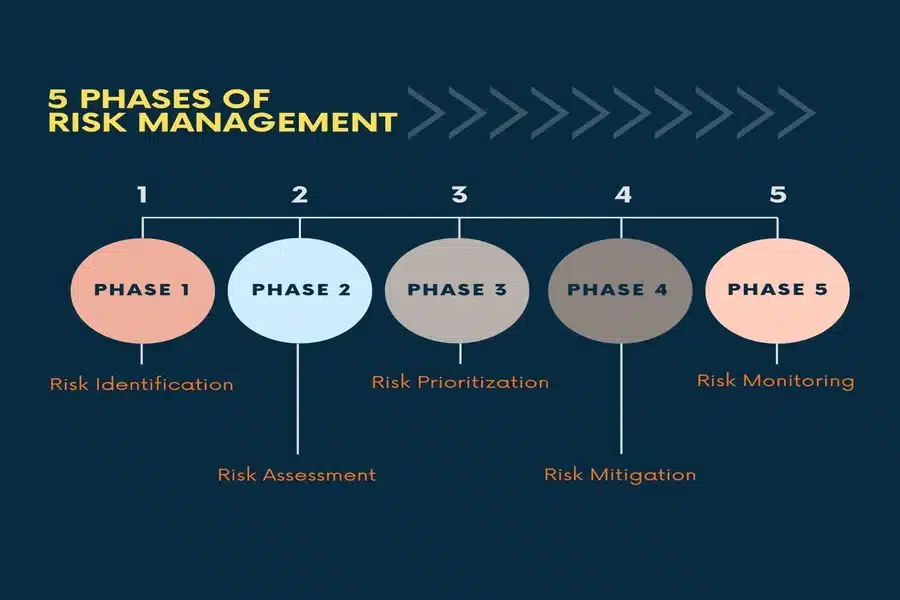
Phase 1: Risk Identification
Risk identification is about listing everything that might go wrong or affect your goals. The team, led by the project manager or Scrum Master, brainstorms risks related to scope, budget, timelines, technology, people, and external factors like regulations or market changes.
In Agile or Scrum, risks are discussed regularly in Scrum ceremonies such as sprint planning, daily stand-ups, and reviews. This frequent conversation makes risks visible early, so they do not stay hidden until it is too late.
Phase 2: Risk Assessment
Once risks are identified, the next step is to assess how likely they are and how much damage they could cause. Teams mostly rate each risk on two simple scales: probability (low, medium, high) and impact (low, medium, high).
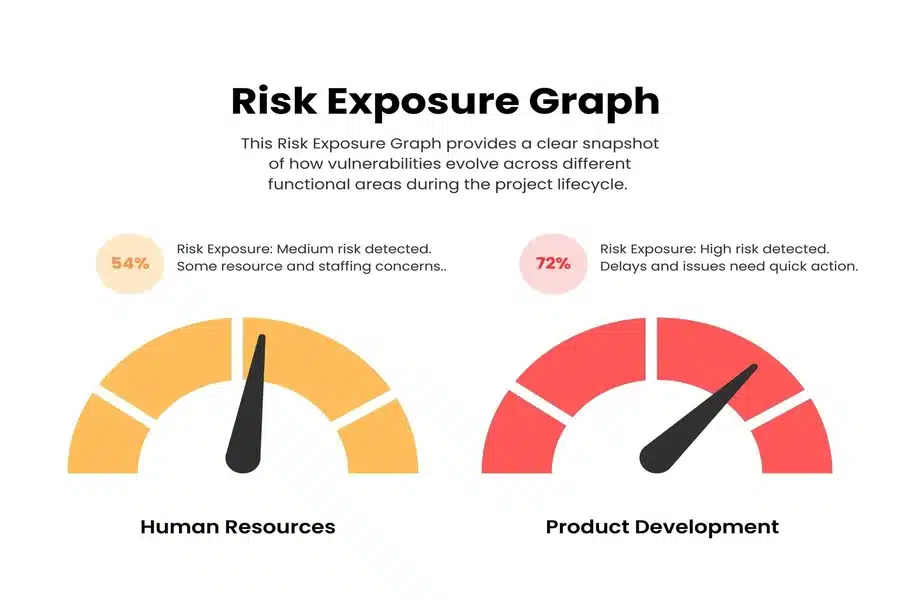
This assessment helps teams focus their energy. A risk with high impact and high probability needs quick attention, while a low-impact, low-probability risk might only need monitoring.
Phase 3: Risk Prioritization
Risk prioritization means deciding which risks matter most right now. In Agile teams, this often happens by adding risk-related tasks or spikes into the product backlog and ordering them by urgency and business impact.
Research on project management shows that organizations that treat risk management as a priority and link it to planning see better project outcomes and less waste. When risk work is visible in the backlog, leaders can clearly see trade-offs and make better decisions.
Phase 4: Risk Mitigation
Risk mitigation is where action happens. For each major risk, the team chooses a response strategy, such as avoid (change the plan), reduce (add controls or safeguards), transfer (use insurance or vendors), or accept (live with it and prepare a fallback).
In Scrum, mitigation might look like adding extra testing, doing a proof-of-concept before a big build, or adjusting sprint goals to tackle risky components earlier. These actions reduce the chance of failure or soften the impact if something goes wrong.
Phase 5: Risk Monitoring
Risk monitoring is a continuous process across the project life cycle. The team regularly checks whether known risks are growing or shrinking and whether any new risks have appeared.
Gartner Survey Studies show that organizations are facing more frequent critical risk events, with over 40% reporting three or more serious incidents in a year. Regular monitoring in reviews, retrospectives, and status meetings helps teams adapt quickly and keep risks under control.
A structured CSM training also introduces these five phases clearly, helping professionals understand how risks fit into Scrum ceremonies and backlog planning. It builds confidence by showing how real teams use risk strategies to improve Sprint outcomes, reduce delays, and create a safety-first mindset that drives consistent delivery.
Final Thoughts
In Scrum, these five phases fit naturally into existing events. Identification and assessment happen during backlog refinement and sprint planning. Prioritization is reflected in backlog ordering. Mitigation is executed through sprint tasks. Monitoring happens in daily stand-ups and sprint reviews.
By treating risk management as an ongoing cycle instead of a one-time task, Agile teams can improve delivery quality, protect budgets, and increase stakeholder trust. This structured, still flexible approach makes projects more resilient in a fast-changing world.